
Compliance advisors reviewing NHVR documentation in a boardroom
Regulatory Framework

NHVR Advisory Hub

The ultimate reference hub for navigating the Heavy Vehicle National Law (HVNL) and the Chain of Responsibility (CoR). We provide clarity on complex legal obligations to protect your people and your business.

Need Expert Guidance?

CoR Australia's consultants — our primary advisory partner — provide tailored advice on how the amended HVNL applies specifically to your supply chain operations.

Understanding Primary Duty

Regulatory update: The amended Heavy Vehicle National Law commenced on 1 August 2026, following the 2025 Amendment Package passed by Queensland Parliament in November 2025. Key changes affect accreditation, Safety Management Systems, audits, work diaries, fitness to drive, and mass, dimension and loading rules.
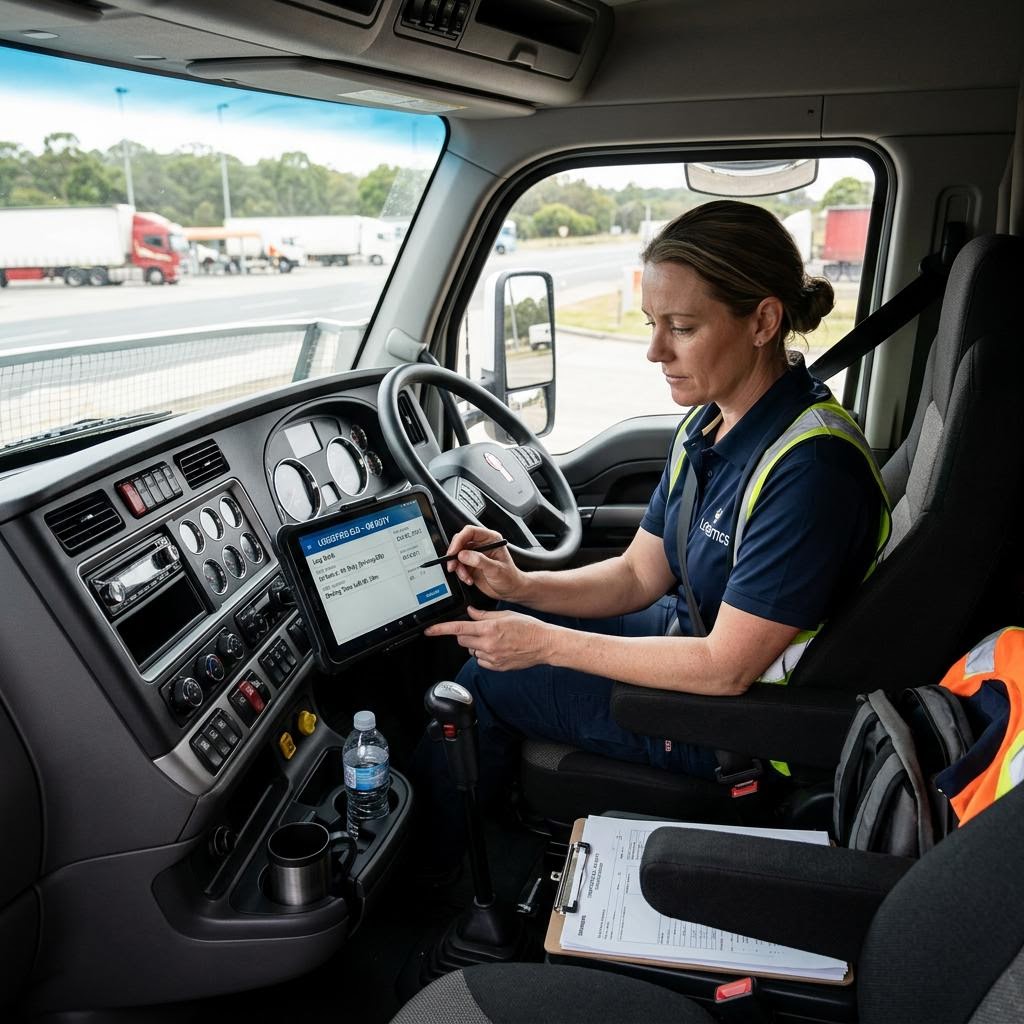
Heavy vehicle driver filling out compliance work diary in cab

Section 26C of the Heavy Vehicle National Law establishes the Primary Duty. It dictates that every party in the Chain of Responsibility must ensure, so far as is reasonably practicable, the safety of the party's transport activities. This duty carries through under the amended HVNL that commenced on 1 August 2026.

This is a positive duty, meaning you cannot wait for an incident to occur. You must proactively identify, assess, and manage risks associated with heavy vehicle transport. The primary duty is non-transferable; you cannot contract out of your safety obligations.

Executive Due Diligence

Under Section 26D, executives of a legal entity have a specific, positive duty to exercise due diligence to ensure the business complies with its safety duties. Ignorance of operations is not a legal defense.


Chain of Responsibility Roles

If you have influence or control over the transport task, you are part of the chain. Liability is based on actual control, not just job titles or contract terms.

Prime Contractors

Responsible for the overall transport task. Must ensure subcontractors are competent, vehicles are compliant, and schedules are realistic without causing fatigue.

Consignors & Consignees

Must ensure loads are properly restrained, accurately declared for weight and dimensions, and that loading times don't pressure drivers into speeding.

Transport Operators

Accountable for vehicle maintenance, driver rostering, fitness for duty, and implementing robust Safety Management Systems across the fleet.

Loaders & Packers

Must verify that goods are packed safely within mass limits and secured to prevent shifting during transit, complying with Load Restraint Guidelines.


Master Code of Practice

The Registered Industry Master Code is an approved Code of Practice under the HVNL. It provides practical, operational guidance on how to manage risks associated with speed, fatigue, mass, dimension, and loading. Following public consultation in late 2025, the NHVR has released a revised 2026 Master Code aligned with the amended HVNL — operators should review their frameworks against the updated edition.

While following the Master Code is not strictly mandatory, courts may consider it when deciding if a party has done all that is reasonably practicable to ensure safety. Demonstrating compliance with the Master Code provides a strong foundation for your legal defense.

  • Provides a benchmark for risk management frameworks.
  • Offers specific control measures for common heavy vehicle risks.
  • Assists in establishing executive due diligence.
  • Scalable to businesses of all sizes and complexities.

Need an independent gap analysis or advisory support?

Ensure your operations meet current NHVR standards. Our advisory team provides actionable insights to mitigate legal and operational risks.